Sub-issue of Nature: The mechanism of yogurt’s health benefits, so that’s it.
Original Singularity Cake Singularity Network is included in the topic # Diabetes 20 # Diet is a door to ask 8 questions.

Yogurt reduces the incidence of diabetes, and finally has a scientific basis.
Recently, André Marette team from Quebec Cardiopulmonary Institute of Laval University in Canada published important research results in the journal Nature Communication [1].
They found that adding yogurt to the high-fat and high-sugar diet of obesity-related type 2 diabetic mice can help maintain the dynamic balance of blood sugar in mice and prevent liver insulin resistance and steatosis.
They also revealed the molecular mechanism behind the effect of yogurt: originally, a high-fat and high-sugar diet would reduce the content of metabolites of branched-chain hydroxy acids (BCHA) in the blood and tissues of mice, and a lot of BCHA would be produced during the fermentation of milk into yogurt, so the intake of yogurt could increase the content of BCHA in the liver and blood, and it should be known that BCHA is negatively related to blood sugar and triglycerides.
They also confirmed in vitro that BCHA can indeed enhance the regulation of insulin on glucose metabolism in liver and muscle cells. In addition, the experiment of fecal bacteria transplantation also confirmed that the regulation of yogurt on flora can also improve glucose metabolism, which also means that flora is another target of yogurt to regulate metabolism.
The research of Marette’s team provided a molecular basis for yogurt to improve type 2 diabetes, and found that BCHA in yogurt is the key molecule to regulate liver glucose metabolism in vivo, which proved the mechanism of yogurt to improve type 2 diabetes from the molecular level.
Screenshot of paper cover
Yogurt, as a kind of milk beverage with health care function, is generally made from fermented milk by Streptococcus thermophilus and Lactobacillus bulgaricus, and has been eaten for 4500 years. Yogurt is closely related to human health, and has been reported in many studies to be related to weight loss [2, 3], nonalcoholic fatty liver disease (NAFLD)[4] and the incidence of type 2 diabetes [5-9]. Since yogurt has so many potential benefits, which beneficial ingredients are playing a role?
Some studies have pointed out that yogurt may play a role in reducing the risk of type 2 diabetes through its rich nutrients [10], Streptococcus thermophilus or Lactobacillus bulgaricus and its metabolites [4, 11]. As for the specific metabolites and metabolic pathways involved, it is not very clear. In order to solve these problems, the Marette team conducted a yogurt intervention study on mice with high-fat and high-sugar diet.
They added yogurt to high-fat and high-sugar feed in the form of freeze-drying, replacing 7.6% of daily energy intake. Mice were divided into normal diet control group (C), high-fat and high-sugar diet group (H) and high-fat and high-sugar diet group (Y) with freeze-dried yogurt. They found that compared with the high-fat and high-sugar group, after 3 months, the total energy intake of mice in the high-fat and high-sugar diet group with freeze-dried yogurt decreased and their weight decreased by 2.9%.
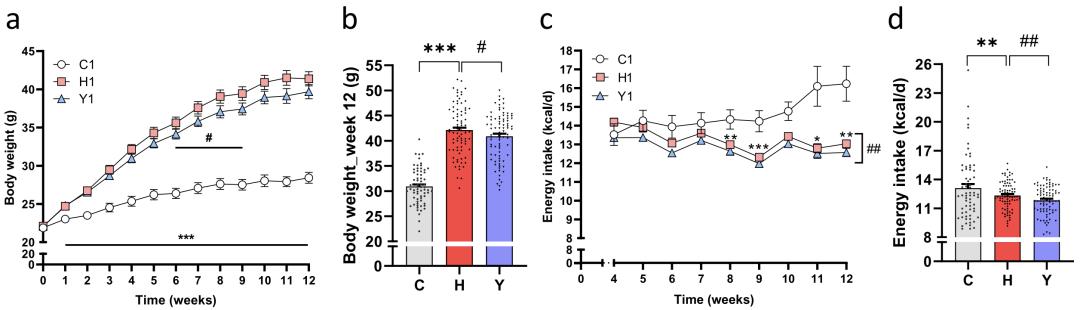
Effects of yogurt intake on body weight and energy intake
Subsequently, Marette’s team analyzed oral glucose tolerance test (OGTT) and insulin resistance index (HOMA-IR), and found that yogurt reduced fasting blood glucose and improved insulin sensitivity in mice fed with high-fat and high-sugar diet.
Since sugar metabolism has been improved, where is the target organ of yogurt?
In order to find the target organ of yogurt regulating glucose metabolism, Marette team tested the systemic insulin sensitivity of mice. They found that in the process of insulin injection, the glucose infusion rate (GIR) of mice fed with high-fat and high-sugar diet (H) decreased significantly, and the whole body glucose absorption capacity was lower than that of yogurt intervention group. They also found that yogurt plays a hypoglycemic role by inhibiting liver glucose production (RA) and increasing the whole body glucose metabolism rate (RD). It can be seen that the target of yogurt may be the liver.
In addition, Marette’s team also found that in addition to regulating liver glucose metabolism, yogurt also reduced liver relative weight and triglyceride level, and reduced liver steatosis and fibrosis. The above data show that yogurt intake can protect liver health.
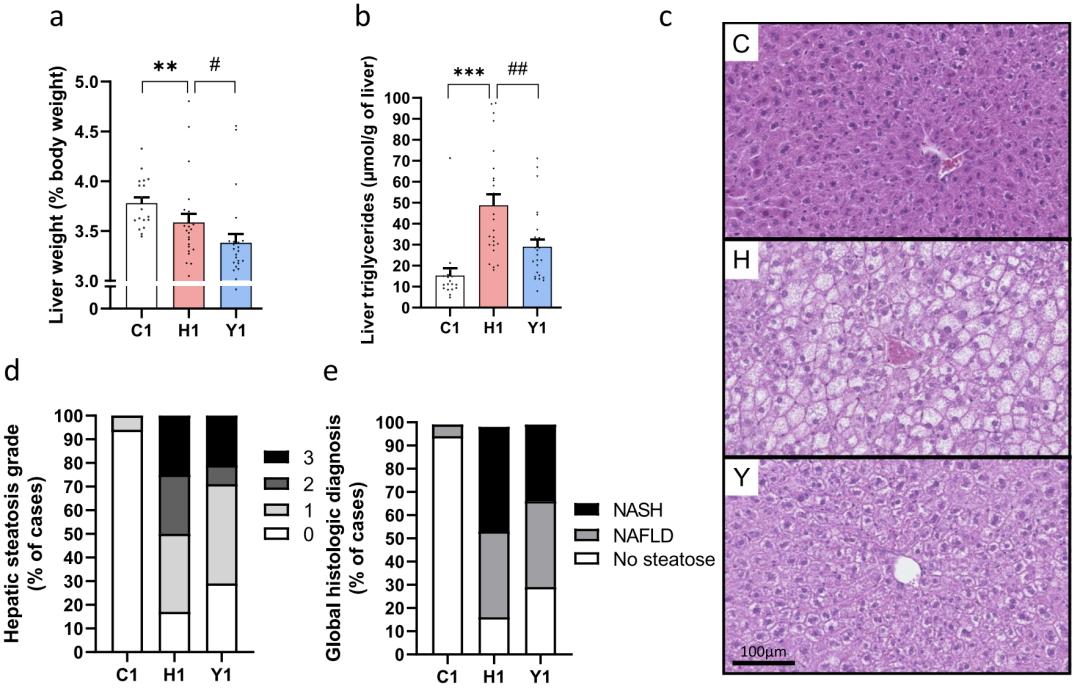
Protective effect of yogurt on liver metabolism and pathology
So which metabolites in yogurt act on the liver and play a role?
Based on the metabonomics method, Marette’s team identified n- acetylglycine, ornithine, n- acetylserine, α-hydroxyisohexyl ester (HICA), 2- hydroxy -3- methylvalerate (HMVA) and α-hydroxyisovalerate (HEVA) from yogurt, which were significant in the liver of mice (Y) who ate yogurt (P≤0.05). Among them, HICA, HMVA and HEVA belong to BCHA metabolites.
During the research, Marette’s team also noticed that high-fat diet could reduce the content of BCHA in blood, liver and muscle of mice. The good news is that eating yogurt can resist the decrease of BCHA content caused by high-fat and high-sugar diet.
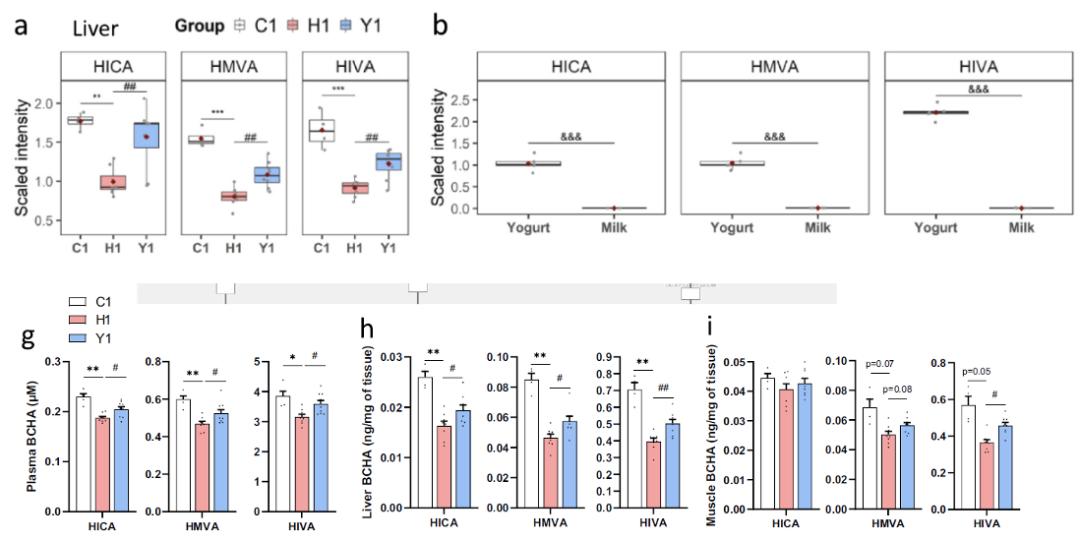
BCHA content in different tissues
Since BCHA is the key for yogurt to regulate liver glucose metabolism, what is the relationship between BCHA and glucose and lipid metabolism?
In order to find out this problem, Marette’s team analyzed the correlation between liver BCHA level and fasting blood glucose and triglyceride in mice fed with yogurt, and found that the levels of HICA, HMVA and HIVA in liver were negatively correlated with fasting blood glucose and triglyceride in liver.
In order to verify the regulatory effect of BCHA mixture on glucose metabolism, Marette team verified the effect of BCHA on glucose production and uptake on FAO hepatocytes and L6 muscle cells. The results showed that the higher the concentration of BCHA, the more obvious the inhibition of glucose production in FAO cells, which indicated that BCHA was a regulator of glucose metabolism in liver and muscle cells.
At the same time, Marette’s team also found that BCHA mixture also increased the glucose uptake of L6 cardiomyocytes, among which the metabolite HICA had the most obvious effect. In addition, it was found in vitro that HICA is a cell regulator of glucose production in liver and glucose uptake in muscle, so HICA may be the key metabolite of yogurt to reduce blood sugar in high-fat and high-sugar mice.
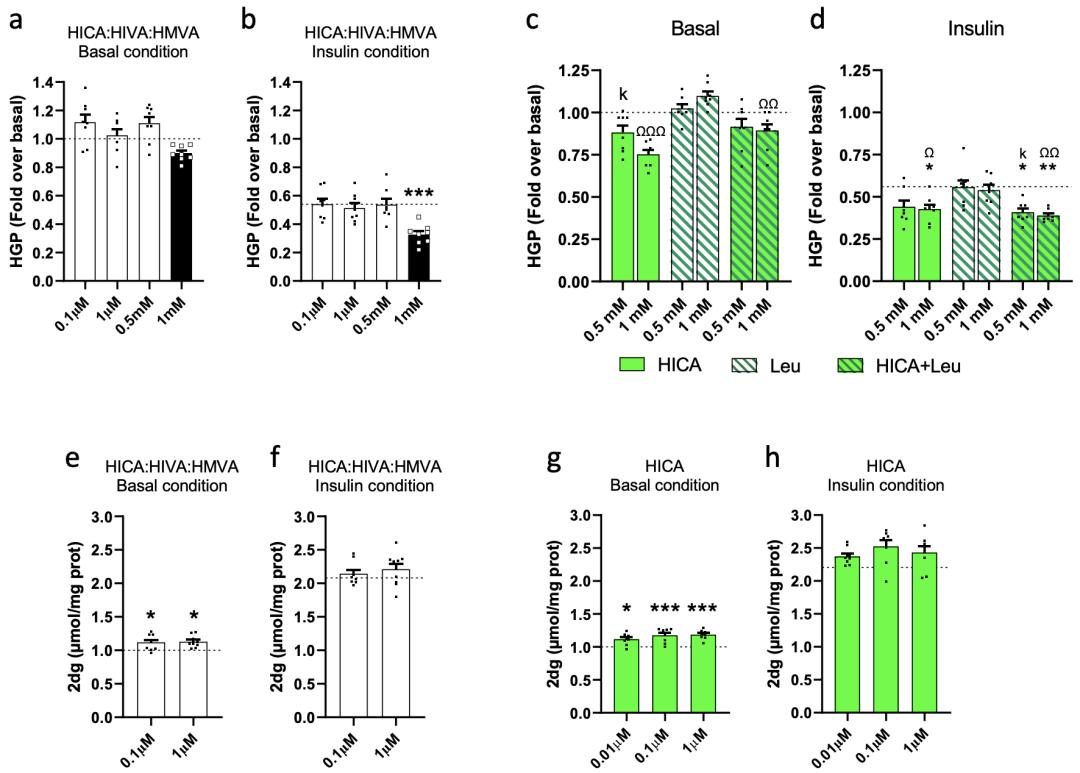
Effects of BCHA on Glycometabolism of FAO Hepatocytes and L6 Myocytes
Yogurt intake not only provides nutrients but also lactic acid bacteria. Yogurt itself also has the function of regulating intestinal health. Is the change of sugar metabolism related to intestinal flora? Using the method of 16S rRNA flora analysis and fecal bacteria transplantation, Marette team evaluated the influence of yogurt intake on intestinal flora and the role of flora in glucose metabolism.
They found that yogurt intake increased the α diversity of flora and significantly changed the β diversity. Marette’s team also transplanted different groups of mouse fecal bacteria to sterile mice, and found that the flora of mice in the high-fat and high-sugar diet group with yogurt could improve the insulin sensitivity of sterile mice. Therefore, yogurt not only provides BCHA to directly play a hypoglycemic role, but also participates in hypoglycemic effect by regulating flora.
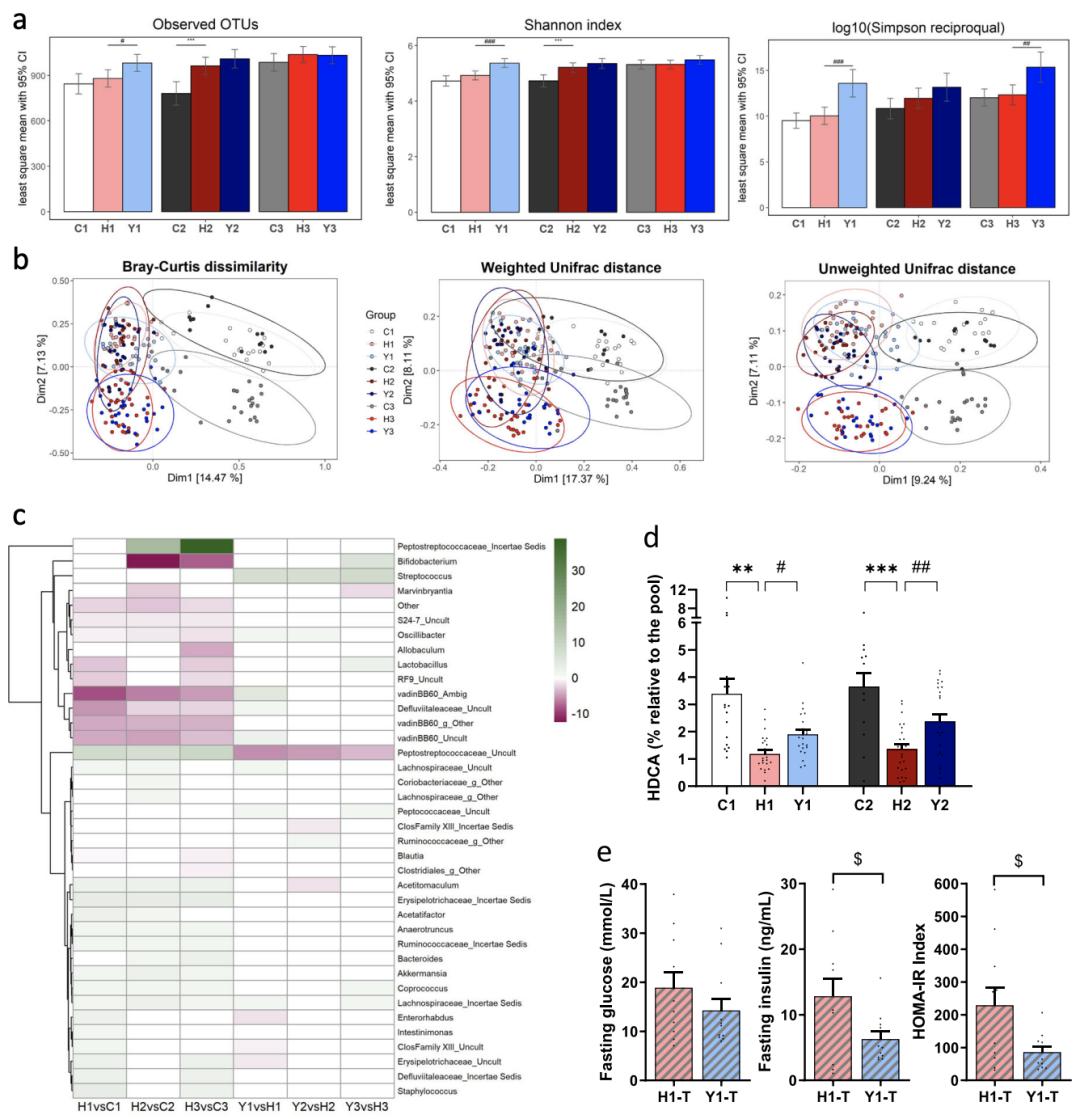
Changes of flora and results of glucose metabolism in mice transplanted with fecal bacteria under the intervention of yogurt
Generally speaking, the research of Marette’s team shows that the intake of yogurt increases the content of BCHA metabolites in the body, and BCHA acts on the liver, reducing the glucose production in the liver, improving the systemic insulin sensitivity and accelerating the utilization of glucose. In addition, the regulation of intestinal flora is another target of yogurt to regulate glucose metabolism.
It should be pointed out that although this study has pushed our knowledge of the health benefits of yogurt to a higher level, it is a mouse and in vitro cell experiment after all, and further human experiments are needed to confirm these effects of yogurt in the future.

References:
1.Daniel N, Nachbar R T, Tran T T T, et al. Gut microbiota and fermentation-derived branched chain hydroxy acids mediate health benefits of yogurt consumption in obese mice [J]. Nat Commun, 2022, 13(1): 1343.
2.Mozaffarian D, Hao T, Rimm E B, et al. Changes in diet and lifestyle and long-term weight gain in women and men [J]. N Engl J Med, 2011, 364(25): 2392-2404.
3.Panahi S, Gallant A, Tremblay A, et al. The relationship between yogurt consumption, body weight, and metabolic profiles in youth with a familial predisposition to obesity [J]. European Journal of Clinical Nutrition, 2019, 73(4): 541-548.
4.Zhang S, Fu J, Zhang Q, et al. Association between habitual yogurt consumption and newly diagnosed non-alcoholic fatty liver disease [J]. Eur J Clin Nutr, 2020, 74(3): 491-499.
5.Kirii K, Mizoue T, Iso H, et al. Calcium, vitamin D and dairy intake in relation to type 2 diabetes risk in a Japanese cohort [J]. Diabetologia, 2009, 52(12): 2542-2550.
6.Drouin-Chartier J P, Li Y, Ardisson Korat A V, et al. Changes in dairy product consumption and risk of type 2 diabetes: results from 3 large prospective cohorts of US men and women [J]. Am J Clin Nutr, 2019, 110(5): 1201-1212.
7.O’Connor L M, Lentjes M A, Luben R N, et al. Dietary dairy product intake and incident type 2 diabetes: a prospective study using dietary data from a 7-day food diary [J]. Diabetologia, 2014, 57(5): 909-917.
8.Soedamah-Muthu S S, de Goede J. Dairy Consumption and Cardiometabolic Diseases: Systematic Review and Updated Meta-Analyses of Prospective Cohort Studies [J]. Current Nutrition Reports, 2018, 7(4): 171-182.
9.Gijsbers L, Ding E L, Malik V S, et al. Consumption of dairy foods and diabetes incidence: a dose-response meta-analysis of observational studies [J]. Am J Clin Nutr, 2016, 103(4): 1111-1124.
10.Panahi S, Fernandez M A, Marette A, et al. Yogurt, diet quality and lifestyle factors [J]. Eur J Clin Nutr, 2017, 71(5): 573-579.
11.Salas-Salvadó J, Guasch-Ferré M, Díaz-López A, et al. Yogurt and Diabetes: Overview of Recent Observational Studies [J]. J Nutr, 2017, 147(7): 1452s-1461s.
Read the original text